

- Image outputs from any node. The editor loads the node’s output images as separate layers, and you export the finished composite as a PSD file.
- Create Layered Image. Create Layered Image stores a layered composition in an optional
compositorinput that is exclusive to this node. The editor loads the stored composition and writes your edits back to it, so the next run of the workflow uses the composition you built. Build the layer stack it composites with Add Layer and Layers From Bounding Boxes, which produce layers rather than storing a composition.
Open the Layer Editor
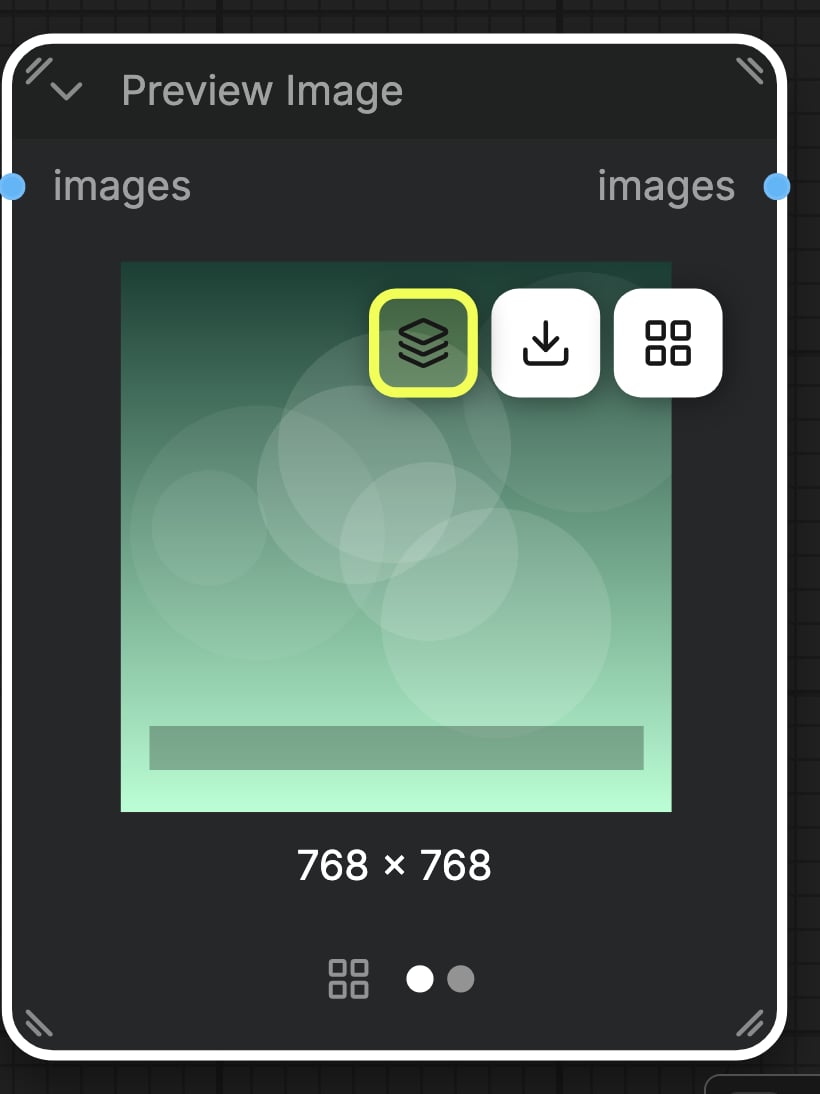
There are two ways to open the editor from the canvas:- Image output preview: hover the output preview of a node that produced more than one image, then click the layers button (Open layer editor) in the top right corner of the preview.
- Command palette: select a single node and run Open Layer Editor for Selected Node.
Editor layout
The editor opens as a full-window dialog with four areas: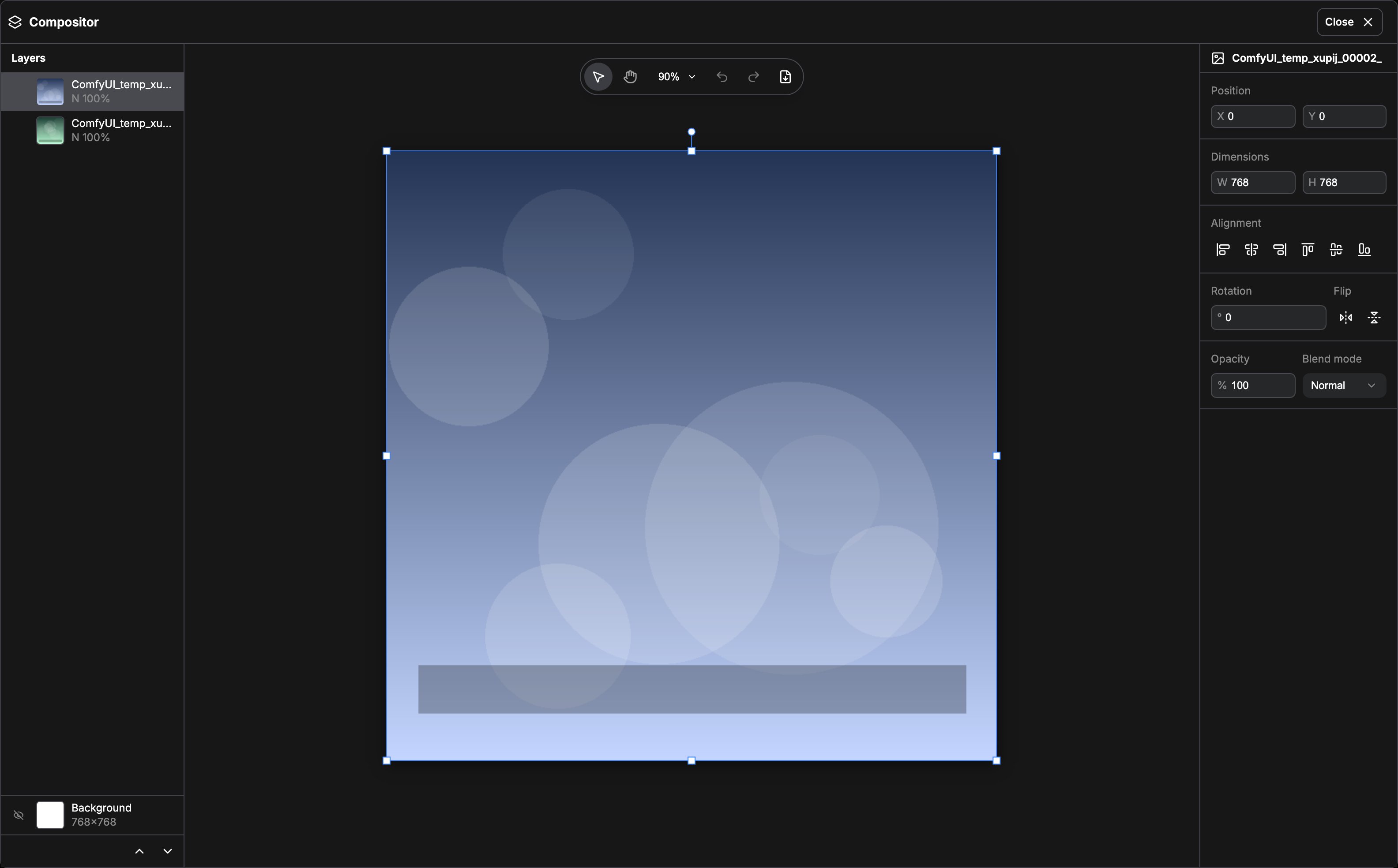
Tools and canvas controls
The toolbar sits over the canvas:- Select: pick and transform layers on the canvas.
- Hand: pan the canvas without changing layers.
- Zoom: zoom presets of 25%, 50%, 100%, and 200%, plus Fit to fit the whole composition into the viewport.
- Undo and Redo: step through your edits.
- Export PSD: download the composite as a PSD file.
Work with layers
Select a layer on the canvas or in the Layers panel, then adjust it in the properties panel:
Layers are drawn in list order. Use the move up and move down actions in the Layers panel to change which layer sits on top, and the visibility toggle to hide a layer without deleting it.
Blend modes include Normal, Multiply, Screen, Overlay, Darken, Lighten, Color Dodge, Color Burn, Hard Light, Soft Light, Difference, Exclusion, Linear Dodge, Linear Burn, Vivid Light, Pin Light, Linear Light, Hard Mix, Subtract, Divide, Grain Extract, Grain Merge, Hue, Saturation, Color, and Luminosity.
Select the Background entry in the Layers panel to edit the composition itself instead of a layer: canvas width and height (64 to 8192 pixels) and the background fill color (the control is labeled Fill).
Save and export
Edits made on Create Layered Image are part of the workflow: the layer state is stored on the node automatically, so the composition is restored when you reopen the workflow. The node replays the stored composition when the inputs it recorded still match the current layer stack; if they no longer match, it composes from the layer properties again and marks the stored composition as stale. The Restore button in the header undoes every change made in the session and returns the canvas to the state loaded from the node. Export PSD downloads the composition as a PSD file with its layers, which you can open in an image editor such as Photoshop. Export needs WebGL in your browser; if WebGL is unavailable, the canvas cannot render and the export fails.Related pages
Create Layered Image
Composite a layer stack into a single image.
Add Layer
Add an image to a compositor layer stack.
Layers From Bounding Boxes
Build compositor layers from bounding boxes.