

This guide is intended for local users running ComfyUI on their own device. If you’d prefer not to install anything locally, try our official cloud service instead.
Try Comfy Cloud
Run ComfyUI online with zero setup. Sign in with Google to get 400 free credits every month.
- Loading example workflows
- Loading from ComfyUI’s workflow templates
- Loading from images with workflow metadata
- Model installation guidance
- Automatic model installation
- Manual model installation
- Completing your first text-to-image generation
About Text-to-Image
Text-to-Image is a fundamental AI drawing feature that generates images from text descriptions. It’s one of the most commonly used functions in AI art generation. You can think of the process as telling your requirements (positive and negative prompts) to an artist (the drawing model), who will then create what you want. Detailed explanations about text-to-image will be covered in the Text to Image chapter.ComfyUI Text-to-Image Workflow Tutorial
1. Launch ComfyUI
Make sure you’ve followed the installation guide to start ComfyUI and can successfully enter the ComfyUI interface. Alternatively, you can use Comfy Cloud to use ComfyUI without any installation.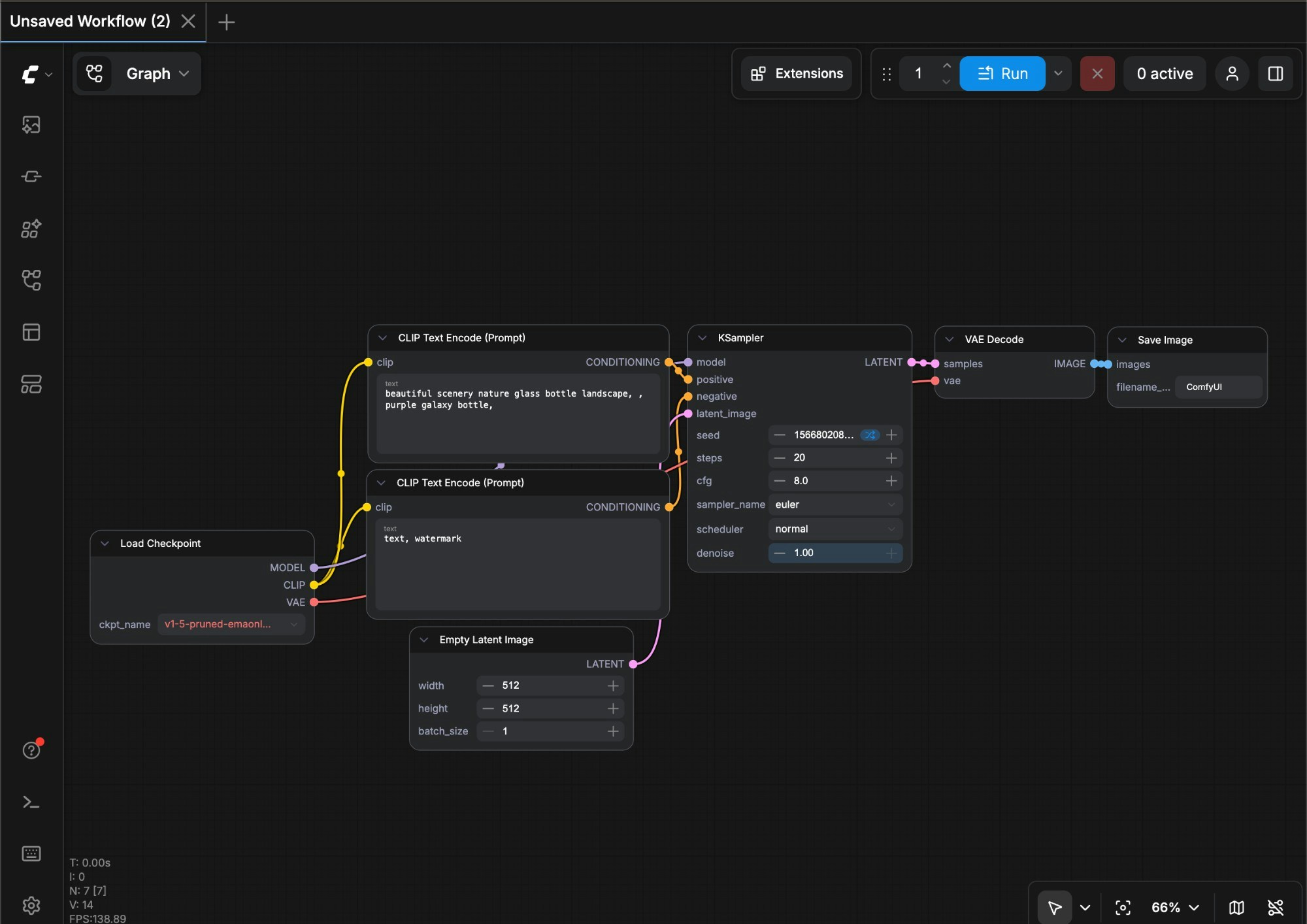
Comfy Desktop
Comfy Desktop
Comfy Desktop supports standalone installation on Windows, macOS (Apple Silicon), and Linux (AppImage and
.deb).- Source is on GitHub
- Windows
- macOS (Apple Silicon)
- Linux
Comfy Desktop (Windows) Installation Guide
Suitable for Windows 10 or later. NVIDIA or AMD GPU recommended.
ComfyUI Portable (Windows)
ComfyUI Portable (Windows)
Portable version is a ComfyUI version that integrates an independent embedded Python environment, using the portable version you can experience the latest features, currently only supports Windows system
ComfyUI Portable (Windows) Installation Guide
Supports Windows ComfyUI version running on Nvidia GPUs or CPU-only, always use the latest commits and completely portable.
Manual Installation
Manual Installation
ComfyUI Manual Installation Guide
Supports all system types and GPU types (Nvidia, AMD, Intel, Apple Silicon, Ascend NPU, Cambricon MLU)
2. Load Default Text-to-Image Workflow
ComfyUI usually loads the default text-to-image workflow automatically when launched. However, you can try different methods to load workflows to familiarize yourself with ComfyUI’s basic operations:- Load from Images with Metadata
- Load from workflow.json
All images generated by ComfyUI contain metadata including workflow information. You can load workflows by:
- Dragging and dropping a ComfyUI-generated image into the interface
- Using menu Workflows -> Open to open an image
3. Model Installation
Most ComfyUI installations don’t include base models by default. After loading the workflow, if you don’t have the v1-5-pruned-emaonly-fp16.safetensors model installed, you’ll see this prompt: First, ComfyUI will warn you that some models are missing: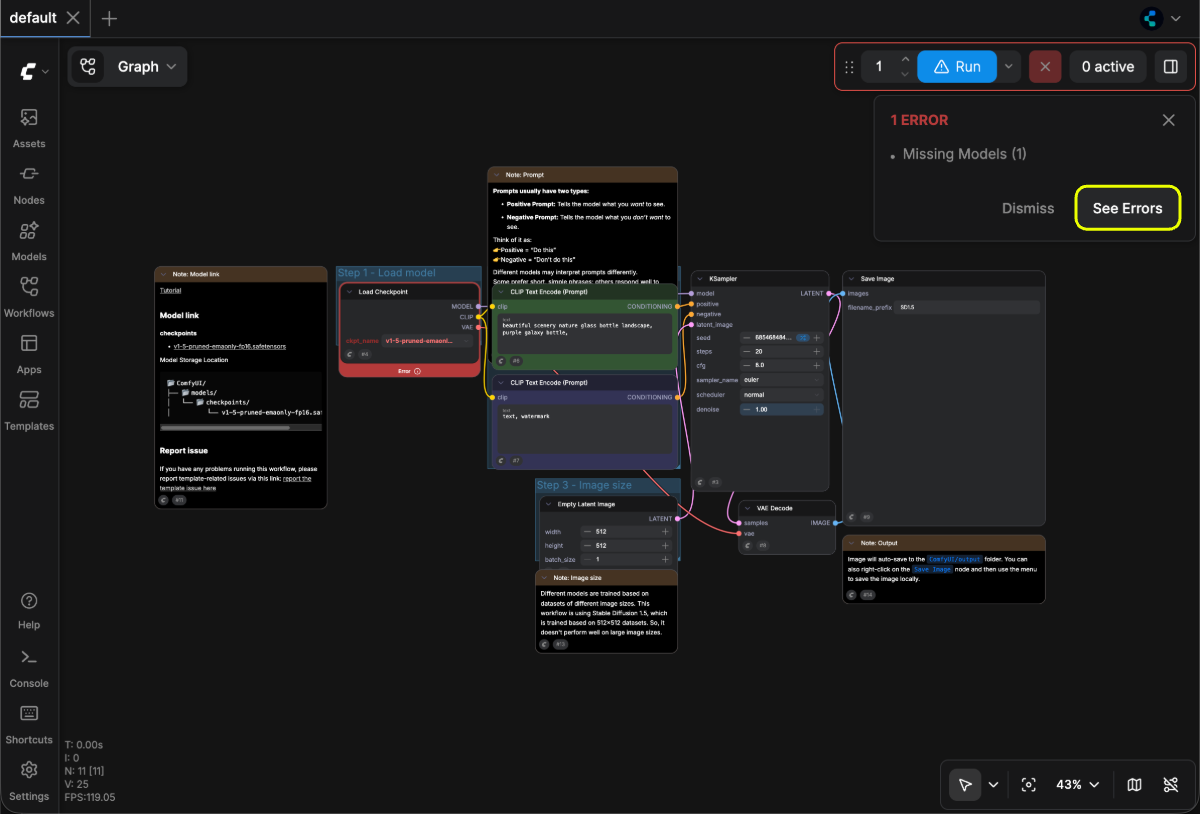
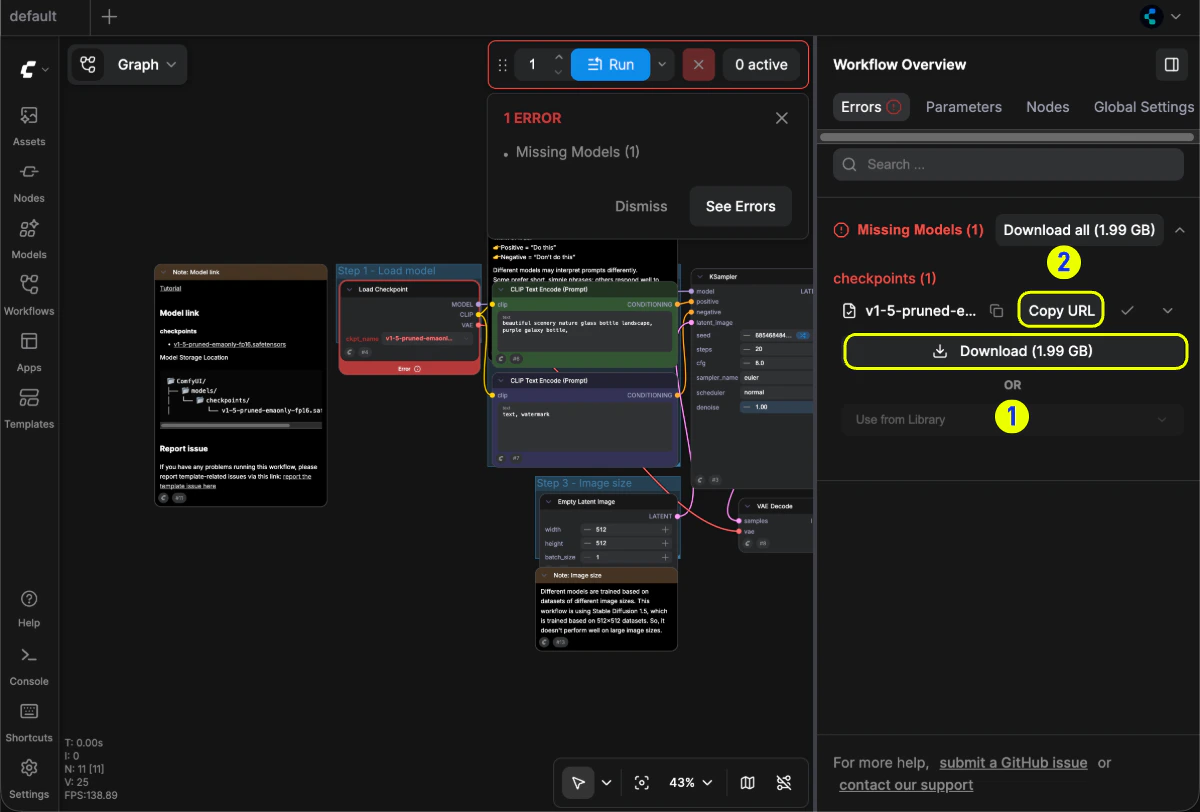
<your ComfyUI installation>/ComfyUI/models/ with subfolders like checkpoints, embeddings, vae, lora, upscale_model, etc. ComfyUI detects models in these folders and paths configured in extra_model_paths.yaml at startup.
- Comfy Desktop (Find models folder)
- ComfyUI Portable (Find models folder)
Click the capsule menu at the top of the desktop app, then open the Storage tab to check your model directories. The capsule only exists in the desktop app, not when ComfyUI runs in a browser. Click the folder icon next to a directory to open it in your file manager.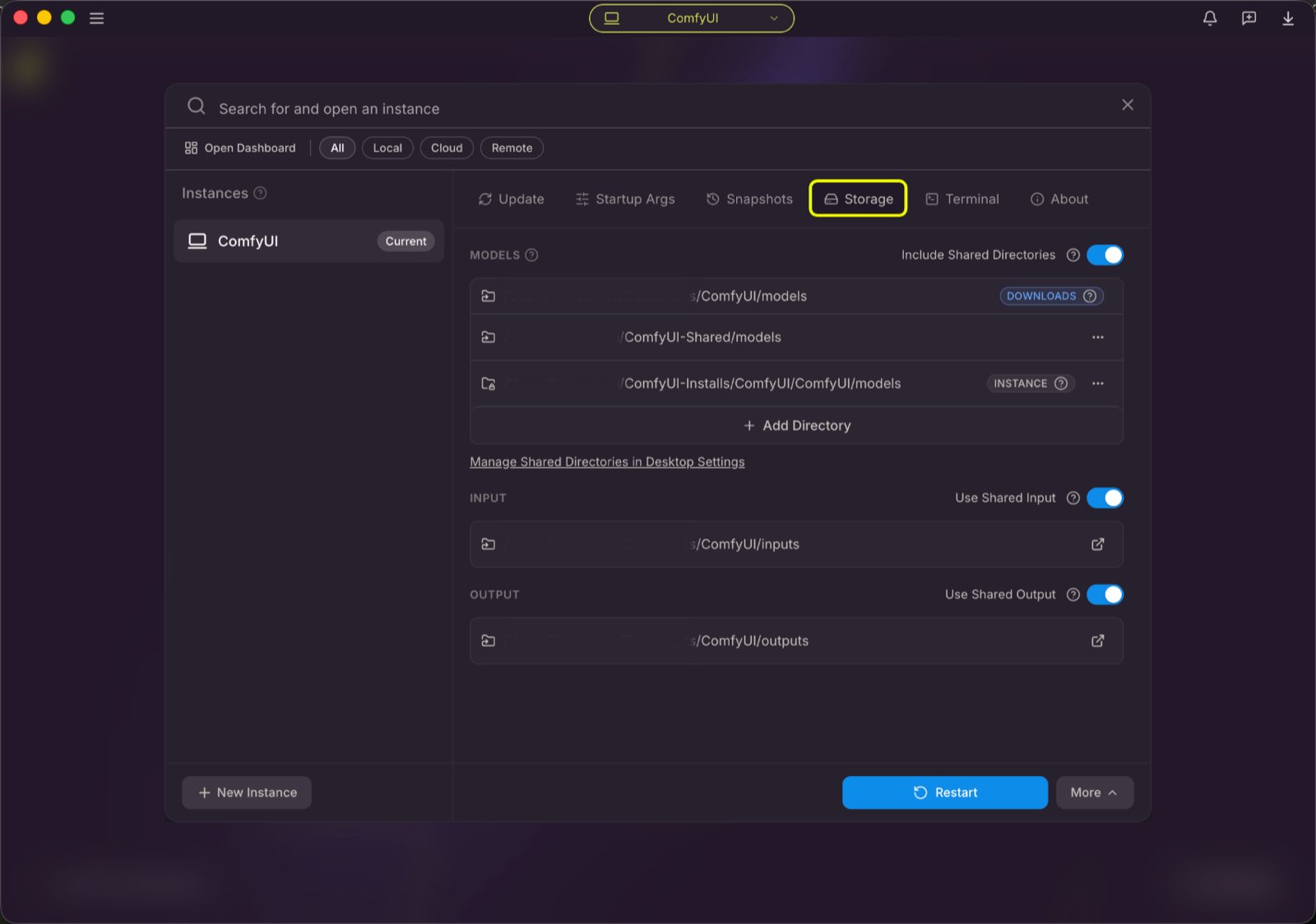
- Automatic Download
- Manual Installation
After you click the Download button, ComfyUI will execute the download, and different behaviors will be performed depending on the version you are using.
- Comfy Desktop
- ComfyUI Portable
The desktop version will automatically complete the model download and save it to the 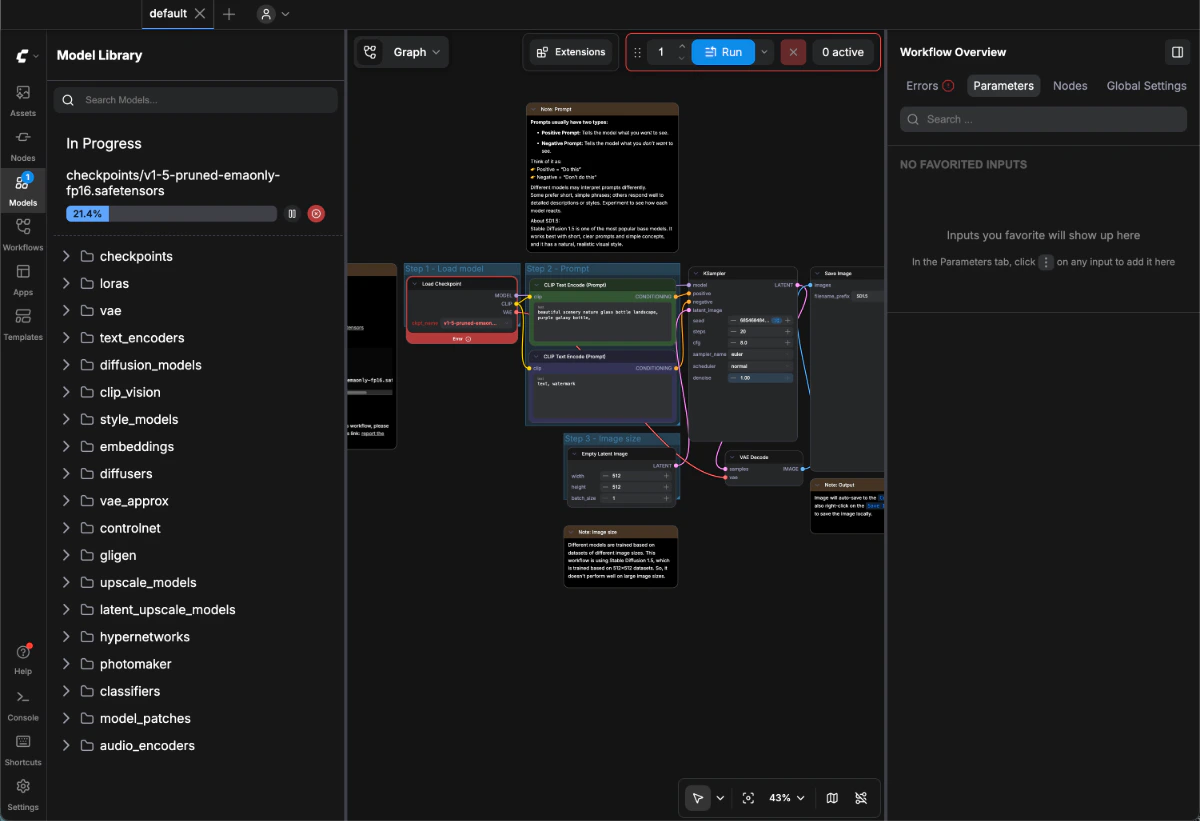
<your ComfyUI installation location>/ComfyUI/models/checkpoints directory.
You can wait for the installation to complete or view the installation progress in the model panel on the sidebar.


4. Load Model and Generate Your First Image
After you install or update models, pressR on your keyboard to refresh object definitions and update model lists in nodes (for example, the dropdown in Load Checkpoint). Then continue with the steps below:
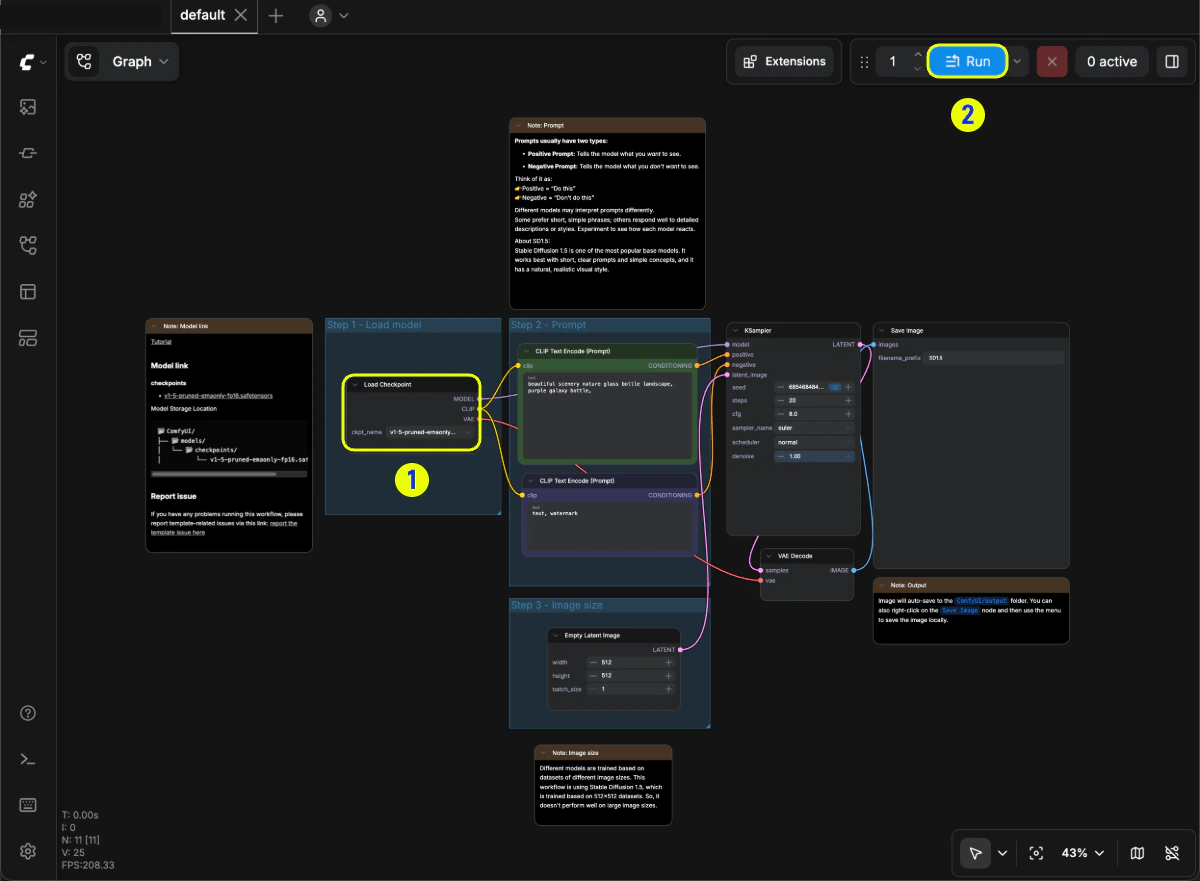
- In the Load Checkpoint node, ensure v1-5-pruned-emaonly-fp16.safetensors is selected
- Click
Runor pressCtrl + Enterto generate
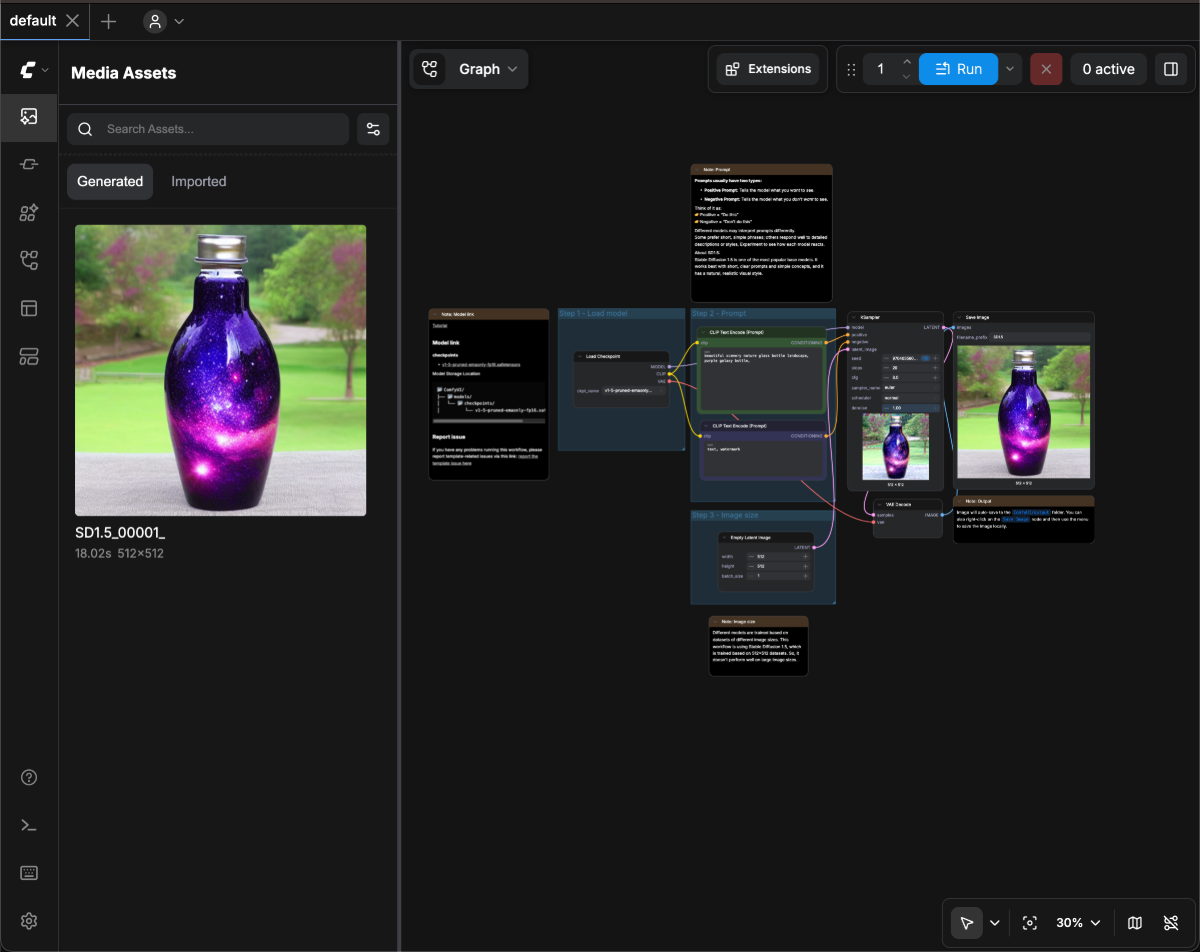
ComfyUI Text-to-Image Workflow Guide
Click here for detailed text-to-image workflow instructions
Troubleshooting
Model Loading Issues
If theLoad Checkpoint node shows no models or displays “null”, verify your model installation location and try refreshing or restarting ComfyUI.